
WEDDING HAIR GUIDE · SMARTGENIUSAI
Wedding Hairstyle Ideas: How to Preview Your Bridal Hair With AI
Wedding hair is difficult to choose from inspiration photos alone because the hairstyle has to work with your own face, dress neckline, veil or accessories, and the mood of the event. An AI preview can help you compare broad bridal directions—soft curls, chignons, braids, half-up styles, sleek buns, tiaras, flowers, and veil-ready looks—before you commit to a trial appointment.
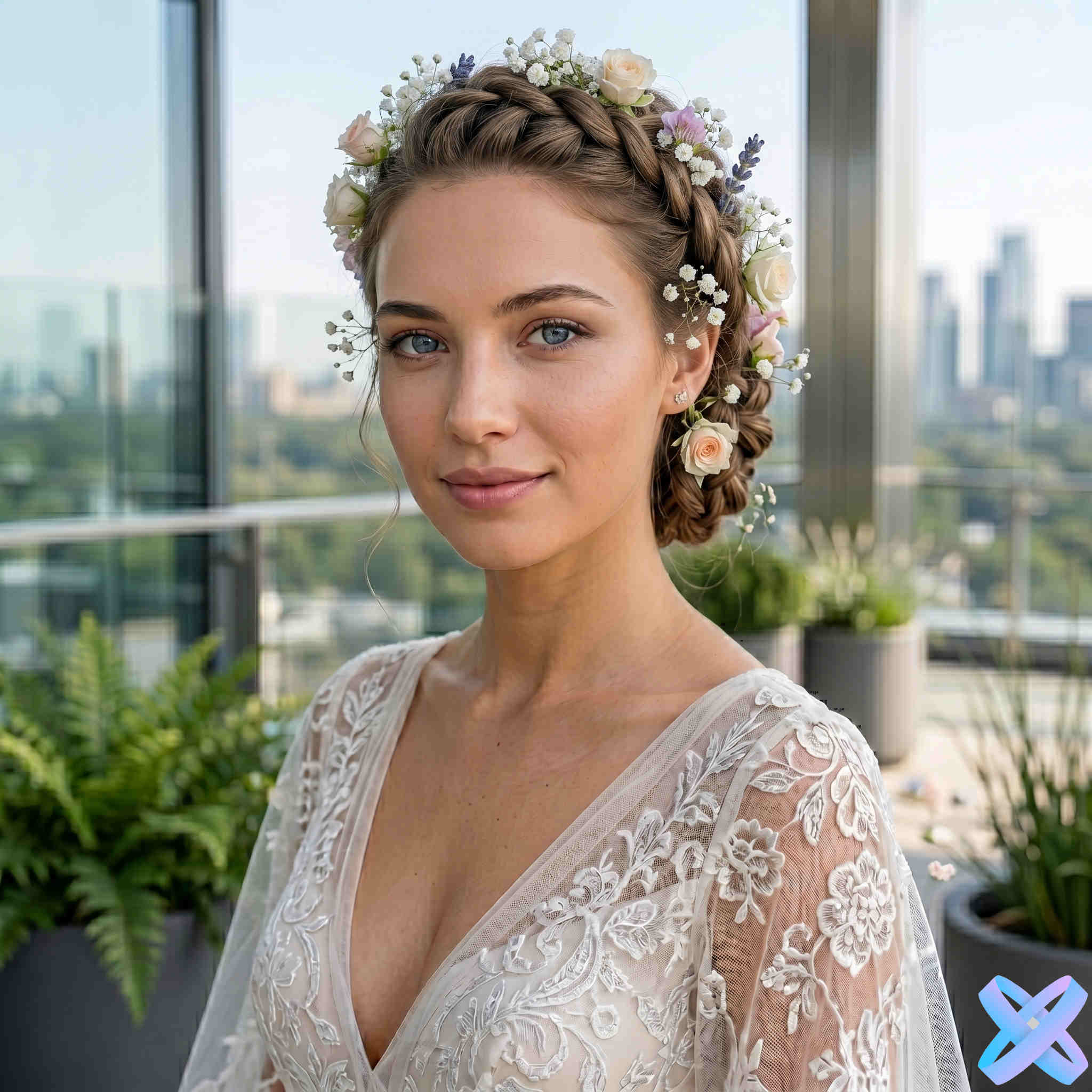
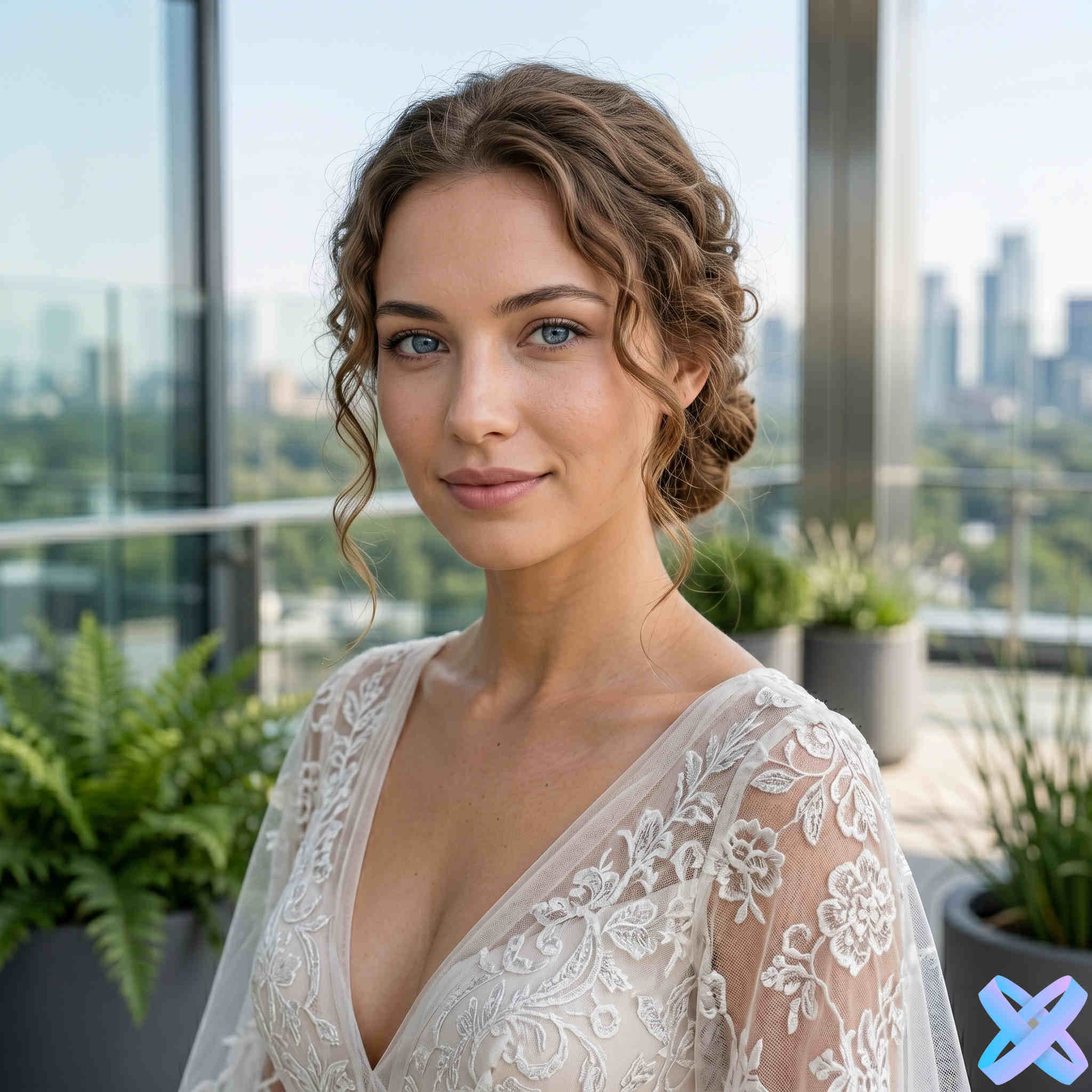
Choose wedding hair in two stages. First compare the silhouette: hair down, half-up, low updo, high updo, or sleek bun. Once one family works with your face and dress, test texture and accessories such as curls, braids, flowers, tiaras, pins, and a veil. This is easier than trying to select one final hairstyle from hundreds of bridal reference photos.
Why wedding hair needs more context than an everyday hairstyle
An everyday haircut mainly has to work with your face, hair, routine, and personal style. Bridal hair has extra variables: the dress neckline, veil placement, jewelry, ceremony style, weather, photography, and how long the hairstyle needs to remain comfortable and secure.
A beautiful updo on Pinterest may hide the exact neckline you want to show. Long curls may look romantic in isolation but compete with a detailed dress back. A high bun may create elegant height but feel too formal for a relaxed outdoor wedding.
AI previewing is useful because you can place the hairstyle on your own face and, ideally, use a photo that approximates the neckline or overall styling direction of your wedding outfit.
Start with five bridal hairstyle families
| Family | Visual effect | What to evaluate |
|---|---|---|
| Hair down | Soft, romantic, natural movement | Face framing, shoulder coverage, weather practicality |
| Half-up | Combines open length with a more controlled crown | Volume, back detail, veil placement |
| Low updo / chignon | Elegant, balanced, exposes neckline | Profile, bun size, front softness |
| High updo | Adds height and strong formal structure | Face length, accessory placement, comfort |
| Sleek bun | Minimal, modern, polished | Hairline exposure, facial features, dress style |
A practical AI wedding-hair workflow
Choose a useful portrait
Use clear hairline visibility and, if possible, a top or neckline that resembles your wedding dress shape.
Compare silhouette families
Try hair down, half-up, low chignon, braided updo, and sleek bun before adding accessories.
Add veil or accessories later
Once the base hairstyle works, compare flowers, tiaras, pins, and veil-ready variations.
Try wedding hairstyles on your own photo
Preview curls, chignons, braids, tiaras, flowers, and veil-ready looks before your bridal hair trial.
Hair down: romantic, but consider the dress and weather
Soft waves or polished curls are a classic bridal direction because they preserve movement and feel familiar. They can also frame the face beautifully in photos. The main tradeoff is that long hair covers the shoulders and may hide dress details.
If your dress has an elaborate back, high neckline, or shoulder detail, preview the hair down with a similar neckline. You may discover that the hairstyle and dress compete for attention.
Outdoor conditions matter too. Wind, heat, humidity, and a long ceremony can change how practical a loose style is. The preview answers the visual question; your stylist should answer the durability question.
Half-up wedding hair: the flexible middle option
Half-up styles keep some length visible while pulling the top or side sections away from the face. This can provide the softness of hair down with more control around the crown and temples.
It is also a useful base for small braids, twists, flowers, pins, or a veil. When previewing, compare how much hair remains around the face. A very open half-up style can feel closer to an updo; a soft face-framing version feels more relaxed.
Low chignon: elegant without excessive height
A low chignon or low bun can expose the neckline and shoulders while keeping the overall center of gravity low. It often works well with veils and decorative pins because there is a clear attachment area at the back.
From the front, pay attention to how much softness remains around the temples. From a side or three-quarter angle, judge the size and placement of the bun. A compact chignon and a large textured low bun can feel like different hairstyles even though both belong to the same family.
Braided updos: texture becomes part of the design
Braids can add visible detail without requiring the hair to remain loose. Crown braids, side braids leading into a bun, or textured braided chignons can suit romantic, rustic, bohemian, and garden wedding aesthetics.
The main preview question is whether the texture feels intentional or too busy next to your dress, jewelry, and headpiece. If the gown already has dense lace or beading, a simpler hairstyle may create better balance.
Sleek bun: modern, clean, and very face-focused
A sleek low or mid bun removes most loose texture and puts attention on the face, makeup, earrings, and dress. It can feel minimal, editorial, or formal depending on the rest of the styling.
Because it exposes the hairline and ears, it is worth previewing carefully if you usually wear hair around the face. Try both a fully sleek version and one with a little softness at the front.
High updo: test the added height
High buns and elevated updos can create a regal or dramatic silhouette. They also add vertical height, which changes how the face and body proportions read in photos.
If you are wearing a tall headpiece or dramatic veil, test those elements later rather than all at once. First decide whether you like the height of the hair itself.
How the neckline changes your hairstyle choice
A strapless or low neckline leaves a large open area around the shoulders, so hair down can add softness without hiding key dress structure. A high neck, detailed back, or statement shoulders may benefit from an updo that clears the area.
There is no mandatory combination. The value of a preview is that you can see the relationship rather than follow a generic wedding rule.
Veil placement should come after the base hairstyle
Veils can attach above an updo, below a bun, at the crown, or into a half-up structure. The placement changes the profile and can obscure details.
Choose the hairstyle family first, then test veil direction. Otherwise a dramatic veil may make you think you love a hairstyle that you have not actually evaluated on its own.
Tiaras, flowers and pins: add one accessory family at a time
Accessories can quickly transform a hairstyle from minimal to romantic or regal. A tiara adds a strong focal point near the top of the head; flowers create softer asymmetry; decorative pins can add detail without changing the silhouette.
For decision-making, do not compare an unadorned bun against a fully styled tiara-and-veil image. Compare base hairstyle first, then add one accessory variable.
Your earrings and jewelry are part of the composition
An updo exposes earrings and neck jewelry much more than hair down. If you plan to wear statement earrings, test at least one open hairstyle. If your jewelry is delicate and your hair is highly textured, it may become less visible in photos.
You do not need perfect digital replicas of your accessories to make this useful. Even a rough visual balance can reveal whether you prefer an open or covered neckline.
Hair color affects how bridal texture photographs
Very dark hair can make intricate braiding or twists read as one strong shape in flat light, while highlights can make texture more visible. Blonde and lighter hair often show individual loops and strands more clearly in photos.
This does not mean one color is better. It simply means your stylist may use texture, shine, accessories, or lighting differently depending on the hair color.
Choose the source photo carefully
Use a sharp portrait without a hat, large headphones, or hair hidden behind objects. For bridal decisions, it is useful to choose a photo with makeup intensity roughly similar to what you expect on the wedding day. A bare-face snapshot and a formal bridal preview can feel disconnected even when the hairstyle itself is good.
If you already have a dress fitting photo where your face is visible, that can be extremely useful for evaluating neckline and overall proportion. Just remember that the AI output is still a concept, not a precise salon guarantee.
What AI cannot tell you about wedding hair
A generated image cannot test how securely an updo will hold, how your hair responds to humidity, whether a heavy veil will pull, or how comfortable pins feel after eight hours. It cannot assess hair strength or recommend safe tension.
That is what the trial appointment is for. Use AI to narrow the visual options so the stylist can spend the trial refining a strong direction instead of starting from zero.
How to prepare for your bridal hair trial
Bring the original portrait and two or three favorite generated references. Write down what matters in each: “I like this low placement,” “keep these soft pieces around the face,” “I want less volume at the crown,” or “I like the veil under the bun.”
Also bring dress and accessory references. Your stylist can then adapt the idea to your real hair length, density, texture, extensions if needed, and the physical requirements of the veil.
Common wedding-hair preview mistakes
- Choosing accessories before the hairstyle: select the base silhouette first.
- Ignoring the neckline: hair and dress occupy the same visual area.
- Comparing unrelated photos: use one source portrait for a fair test.
- Overloading every result: veil + tiara + flowers + braids can hide what you actually prefer.
- Skipping the real hair trial: the preview narrows aesthetics; the stylist verifies feasibility and hold.
Frequently asked questions
How can I see myself with a wedding hairstyle?
Use a clear portrait and compare several bridal hairstyle families on the same photo before adding veils or accessories.
What wedding hairstyle works with a veil?
Low buns, chignons, half-up styles, and many other directions can support a veil. Placement depends on the hairstyle and veil design, so test the base look first and discuss attachment with your stylist.
Should I wear my hair up or down for my wedding?
Preview both with a similar neckline. Consider dress detail, weather, comfort, jewelry, and how much hair you want around the face and shoulders.
Can AI show wedding hair with a tiara or flowers?
Yes. Add accessories only after you have chosen a base hairstyle family so you can judge the variables separately.
Do I still need a bridal hair trial?
Yes. A preview helps you choose the visual direction, while the real trial tests hold, comfort, texture, veil attachment, and what is achievable with your actual hair.
Final takeaway
Choose bridal hair from large decisions to small ones: first silhouette, then texture, then accessories and veil placement. An AI preview helps you understand how those ideas interact with your own face and overall styling. Take the strongest two or three references to a real hair trial, where a stylist can adapt them to your actual hair and make the look secure enough for the day.